
Dual pricing is one of the most effective tools available to small business owners who are tired of losing 2.5-3% of every card sale to processing fees. But for a lot of merchants, the concept sounds more complicated than it is. Here’s exactly how dual pricing works — from the terminal to the customer experience to your bank account.
The Core Concept
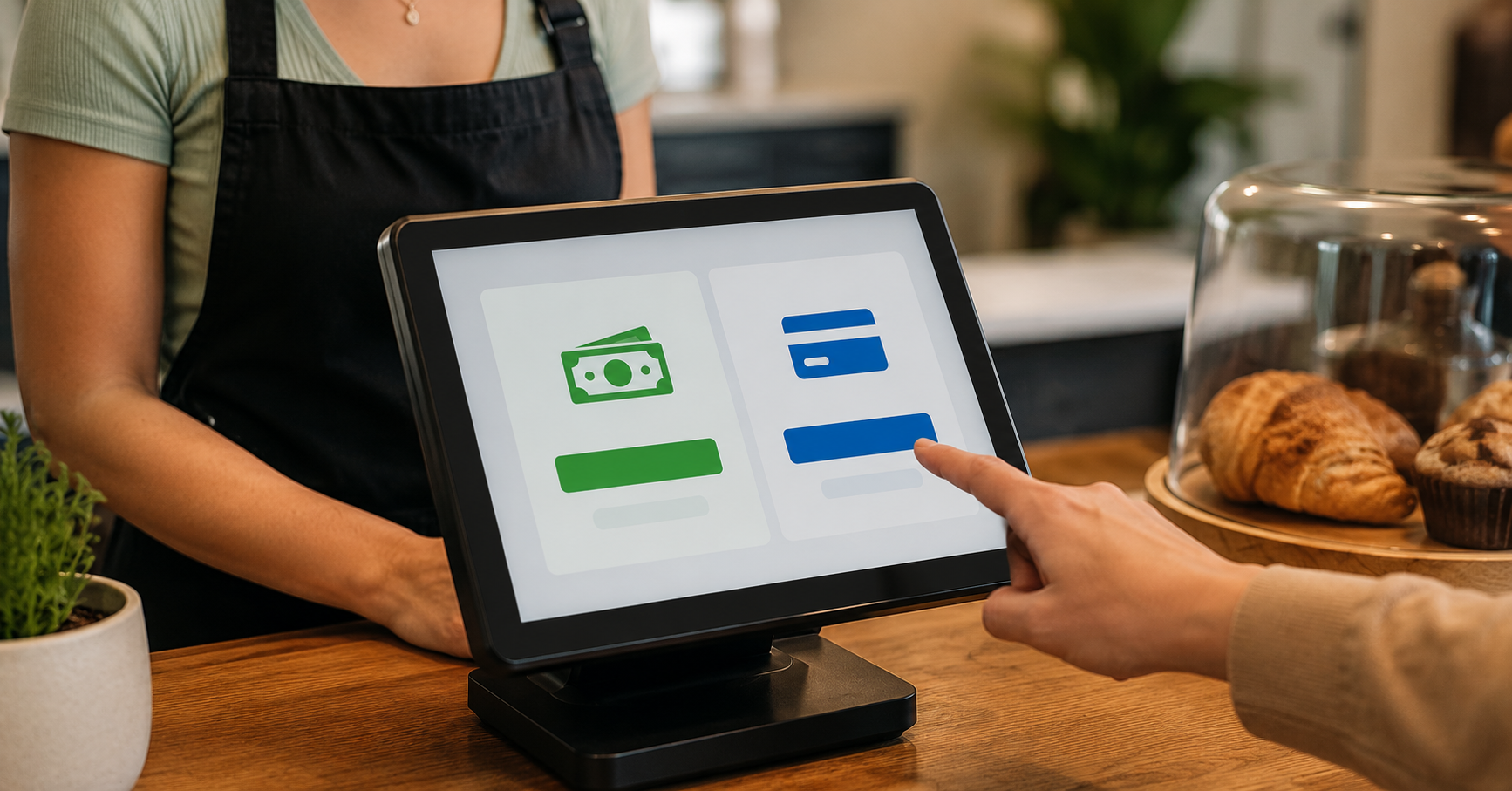
Dual pricing is simple: every item or service in your business has two prices — a cash price and a card price. Both are displayed at the point of sale before the customer pays. The customer chooses their payment method, pays the corresponding price, and the transaction is complete. No surprise fees. No surcharge line. No awkward conversation.
The card price is set to cover the cost of credit card acceptance — typically 3-4% above the cash price, depending on your actual processing costs. When a customer pays by card, you collect the card price and keep 100% of it after processing. When a customer pays cash, you collect the cash price and keep 100% of that too. Either way, processing fees are no longer coming out of your pocket.
Step 1: Terminal Setup
Everything starts at the point of sale. Dual pricing requires a terminal or POS system that’s specifically configured to display both prices and — critically — to automatically identify debit cards and apply the cash price to them.
That last part is non-negotiable from a compliance standpoint. Federal law under the Durbin Amendment prohibits charging debit card holders more than cash customers. A compliant dual pricing terminal reads the BIN range of every card at the moment of swipe or tap and routes debit transactions to the cash price automatically. This happens in the background — your staff doesn’t do anything differently.
The Dejavoo terminals we deploy are purpose-built for dual pricing. The firmware handles BIN recognition, price display, and receipt formatting automatically. There’s no manual configuration your staff needs to manage at the register.
Step 2: Price Display
Once the terminal is configured, both prices need to be displayed with equal prominence wherever prices are shown. Card brands including Visa and Mastercard require that neither price be buried or minimized relative to the other — the cash price can’t be in small print while the card price is featured, or vice versa.
In practice this means your customer-facing POS screen shows both prices during checkout. For retail environments, shelf tags and price displays are updated to show both prices. For restaurants, the POS display handles it at the ordering or payment stage — many operators also update printed menus, though the POS display alone satisfies the compliance requirement in most configurations.
This price display is the disclosure. Unlike surcharging, there’s no additional signage required at your store entrance. The prices themselves communicate the program to the customer before any payment decision is made.
Step 3: The Customer Experience
From the customer’s perspective, dual pricing is familiar. They see a cash price and a card price — the same model they’ve seen at gas stations for decades. They choose how they want to pay. The transaction goes through at the price that matches their payment method.
There’s no line on the receipt that says “surcharge.” The receipt reflects the price the customer paid — because that was the price, not a base price plus a fee. This is one of the most important practical differences between dual pricing and surcharging, and it’s why customer pushback is significantly lower with dual pricing than with surcharge programs.
Most merchants who implement dual pricing correctly report minimal customer friction. Transparency at the point of ordering or sale — not at the register after the customer has already committed to a purchase — is what makes the difference.
Step 4: Settlement and Your Bank Account
At end of day when your batch settles, here’s what happens: every card transaction settles at the card price. Your processor takes their small per-transaction fee from the card price — which was built to cover exactly that cost. What hits your bank account is effectively the same as if the customer had paid cash.
For a restaurant doing $50,000 a month in card sales at a blended rate of 2.75%, that’s $1,375 a month that previously went to the processor. Under dual pricing, that $1,375 stays in your account. Over a year, that’s $16,500 — back in your business.
Step 5: Ongoing Compliance
Dual pricing isn’t a set-it-and-forget-it program in the sense that compliance requirements can evolve. Card brand rules, state regulations, and federal guidelines are updated periodically. Working with a processor who stays current on those changes — and whose terminal firmware updates automatically — is how you stay protected without having to track it yourself.
DropTheFee monitors compliance requirements across all card brands and updates our merchant programs accordingly. You don’t need to become a compliance expert. You need a processor who already is one.
Frequently Asked Questions
Does dual pricing work with all card types — Visa, Mastercard, Amex, Discover?
Yes, when implemented correctly. Each card brand has its own operating rules around dual pricing, and a compliant program is structured to satisfy all of them simultaneously.
What if a customer wants to pay half cash and half card?
Split tender transactions are handled at the terminal level. Your processor can configure how these are treated — typically the card portion is charged at the card price prorated to the card amount.
How long does it take to set up dual pricing?
Terminal configuration and deployment typically takes a few business days once your merchant account is set up. Training your staff takes less than an hour — the system handles the complexity, not the people.
Will my existing merchant account work with dual pricing?
It depends on your current processor and terminal. Many legacy setups aren’t configured for compliant dual pricing. A free processing analysis will tell you exactly what your current setup supports and what would need to change.
See How Much You Could Keep
Now that you know how dual pricing works, the next step is seeing what it means for your specific business. Visit dropthefee.com and request a free processing analysis — we’ll show you exactly what your current fees are costing you and what dual pricing would put back in your pocket.